
Agenda
Times are subject to change.
Pick up your badge, grab some breakfast and network with your peers!
Pick up your badge, grab some breakfast and network with your peers!
Welcome to the Fed Tech Priorities Summit!
Welcome to the Fed Tech Priorities Summit!

Nick Wakeman
Editor-in-ChiefWashington Technology
As the federal government gears up for FY26, agencies face a critical inflection point for modernization. Learn more about the administration’s federal priorities from top agency leaders.
As the federal government gears up for FY26, agencies face a critical inflection point for modernization. Learn more about the administration’s federal priorities from top agency leaders.

Pavan Pidugu
Chief Digital & Information OfficerDepartment of Transportation

Frank Konkel
Editor-in-chiefGovExec
Underwriter

As federal agencies rapidly adopt artificial intelligence to advance mission outcomes, AI is also expanding the cyber threat landscape. This session delves into how AI-driven risks—from model manipulation and data leakage to AI-enabled attacks and edge deployments—are challenging traditional security approaches. We’ll explore emerging threats, the role of model context protocols in strengthening governance and control, and how Zero Trust principles apply to AI systems. Gain practical steps to securing AI, reducing risk, and ensure responsible, mission-aligned adoption.
As federal agencies rapidly adopt artificial intelligence to advance mission outcomes, AI is also expanding the cyber threat landscape. This session delves into how AI-driven risks—from model manipulation and data leakage to AI-enabled attacks and edge deployments—are challenging traditional security approaches. We’ll explore emerging threats, the role of model context protocols in strengthening governance and control, and how Zero Trust principles apply to AI systems. Gain practical steps to securing AI, reducing risk, and ensure responsible, mission-aligned adoption.

Kynan Carver
Vice President, CybersecurityMaximus

Tom Suder
CEOATARC
As agencies accelerate transformational technology deployments—from AI systems and cloud modernization to Zero Trust architectures and cybersecurity resilience—securing the right talent is emerging as a defining challenge for modernization success. Federal technologists and policymakers alike have acknowledged that shrinking workforce ranks, prolonged hiring freezes, and outdated hiring processes have strained agency capacity even as demand for digital skills grows. With fewer than 9% of federal employees under the age of 30 and workforce pipelines disrupted by hiring bottlenecks and processes, there’s a need for new approaches to recruitment and retention.
This session will unpack how agencies and the Office of Personnel Management (OPM) are experimenting with next-generation talent strategies—from skills-based hiring frameworks and cross-government virtual job fairs to new programs like the U.S. Tech Force that seek to bring early-career and specialized technologists into public service. Attendees will explore how to expand internal tech expertise, streamline recruitment pathways, partner with education and private sector stakeholders, and build flexible, cross-agency teams equipped for the future of federal mission delivery.
As agencies accelerate transformational technology deployments—from AI systems and cloud modernization to Zero Trust architectures and cybersecurity resilience—securing the right talent is emerging as a defining challenge for modernization success. Federal technologists and policymakers alike have acknowledged that shrinking workforce ranks, prolonged hiring freezes, and outdated hiring processes have strained agency capacity even as demand for digital skills grows. With fewer than 9% of federal employees under the age of 30 and workforce pipelines disrupted by hiring bottlenecks and processes, there’s a need for new approaches to recruitment and retention.
Read More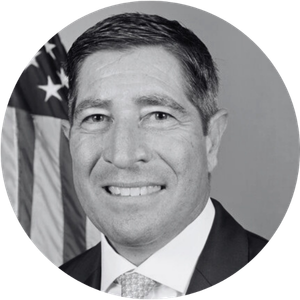
Scott Kupor
DirectorU.S. Office of Personnel Management
Frank Konkel
Editor-in-chiefGovExec
Underwriter

Delivering digital modernization at mission speed requires more than just new tools; it demands a new approach.
Federal agencies are under increasing pressure to deliver secure, high-quality digital services faster, yet many hit a wall trying to balance rapid iteration with strict security mandates. In this focused 15-minute session, Sean Mee, Vice President, Solutions Architecture, OutSystems, and Jim Hutcherson, Partner and CTO Lead, IBM, explore how leading agencies are breaking the cycle of "one-off" development by adopting a scalable, portfolio-based approach to delivery.
Delivering digital modernization at mission speed requires more than just new tools; it demands a new approach.
Read More
Jim Hutcherson
Low-Code/No-Code CTO LeadIBM

Sean Mee
RVP, Solution Architecture, AmericasOutSystems
Artificial intelligence is no longer a speculative topic in federal IT — it’s rapidly becoming a core operational capability across mission portfolios. According to recent federal inventories, agencies reported more than 1,700 distinct AI use cases, with generative AI adoption increasing nearly ninefold over the past year and applications spanning from internal operations to direct citizen service delivery. Across the federal landscape, organizations including HHS, VA, and DHS are using AI already to streamline workflows, augment analytics, and enable new service models that improve outcomes and responsiveness.
This session will highlight concrete AI deployments that are delivering measurable mission value — from predictive analytics and automation of administrative workflows to secure, citizen-facing services — while addressing the practical hurdles of scaling, compliance, and integration in the federal context. Panelists will share lessons on operationalizing AI, managing risk, and aligning investments with FY26 priorities, giving attendees actionable strategies to turn experimentation into impact.
Artificial intelligence is no longer a speculative topic in federal IT — it’s rapidly becoming a core operational capability across mission portfolios. According to recent federal inventories, agencies reported more than 1,700 distinct AI use cases, with generative AI adoption increasing nearly ninefold over the past year and applications spanning from internal operations to direct citizen service delivery. Across the federal landscape, organizations including HHS, VA, and DHS are using AI already to streamline workflows, augment analytics, and enable new service models that improve outcomes and responsiveness.
Read More
Kim Brandt
Deputy Administrator & Chief Operating OfficerCenters for Medicare & Medicaid Services

Alexandra Kelley
ReporterNextgov/FCW
Underwriter

As AI, automation, and other digital tools rapidly expand throughout our economy, it’s more important than ever to stay alert to changing fraud patterns and how our fraud prevention tactics must evolve in real-time. In this short session, Socure’s Jordan Burris joins moderator Robert Shea to discuss Socure’s latest insights on a new kind of fraud network forming to evade traditional signals. The discussion will explore how fraud rings are quickly disappearing as fraud perpetrators leverage common digital infrastructure to disrupt the industry’s most common tactics for catching fraudulent identities. Attendees will gain an inside look into how fraud is changing as well as how to approach this challenge in a government context.
As AI, automation, and other digital tools rapidly expand throughout our economy, it’s more important than ever to stay alert to changing fraud patterns and how our fraud prevention tactics must evolve in real-time. In this short session, Socure’s Jordan Burris joins moderator Robert Shea to discuss Socure’s latest insights on a new kind of fraud network forming to evade traditional signals. The discussion will explore how fraud rings are quickly disappearing as fraud perpetrators leverage common digital infrastructure to disrupt the industry’s most common tactics for catching fraudulent identities. Attendees will gain an inside look into how fraud is changing as well as how to approach this challenge in a government context.

Jordan Burris
Head of Public SectorSocure

Robert Shea
Chief Executive OfficerGovNavigators
Underwriter

The past year has proven that AI is here to stay and that it will fundamentally change the way humans work. The transformation ahead of us has been compared to the revolutionary impact of inventions like the printing press, the steam engine, and the internet. How do organizations prepare their operations and their people for change that can feel overwhelming but inevitable and imminent? Hear what some organizations are doing to “lean in” to the change, in a way that builds trust and encourages innovation.
The past year has proven that AI is here to stay and that it will fundamentally change the way humans work. The transformation ahead of us has been compared to the revolutionary impact of inventions like the printing press, the steam engine, and the internet. How do organizations prepare their operations and their people for change that can feel overwhelming but inevitable and imminent? Hear what some organizations are doing to “lean in” to the change, in a way that builds trust and encourages innovation.

Leslie Casson Stevens
Industry Executive AdvisorSAP
Tom Suder
CEOATARC
Federal acquisition is at a pivot point—with continued modernization efforts, emerging policy reforms, and a shifting supplier landscape shaping how agencies buy technology and services. While updates to the Federal Acquisition Regulation (FAR) aim to streamline processes, the growth of hybrid contract vehicles, modular procurement approaches, and outcomes-based acquisitions is redefining how missions are delivered.
This session will go beyond headlines to explore how acquisition innovation is reshaping the federal marketplace — from regulatory redesign and data-driven contract strategy to flexible vehicles that support rapid tech refresh cycles. Panelists will offer insights for federal buyers and industry partners on navigating the changing landscape, reducing procurement friction, and aligning acquisition strategies to FY26 modernization priorities.
Federal acquisition is at a pivot point—with continued modernization efforts, emerging policy reforms, and a shifting supplier landscape shaping how agencies buy technology and services. While updates to the Federal Acquisition Regulation (FAR) aim to streamline processes, the growth of hybrid contract vehicles, modular procurement approaches, and outcomes-based acquisitions is redefining how missions are delivered.
Read More
Tim Cooke
CEOASI Government

Stephanie Kostro
PresidentProfessional Services Council
Nick Wakeman
Editor-in-ChiefWashington Technology
Underwriter

As federal agencies race to modernize legacy systems and adopt artificial intelligence, the threat landscape is evolving with unprecedented speed. In this fireside chat, Soledad Antelada Toledano from Google Cloud’s Office of the CISO will explore how government leaders can shift from reactive postures to proactive, intelligence-driven defense. The discussion will cover the convergence of threat intelligence and security operations, the role of AI in augmenting federal defenders, and practical strategies for securing critical infrastructure against emerging vulnerabilities.
As federal agencies race to modernize legacy systems and adopt artificial intelligence, the threat landscape is evolving with unprecedented speed. In this fireside chat, Soledad Antelada Toledano from Google Cloud’s Office of the CISO will explore how government leaders can shift from reactive postures to proactive, intelligence-driven defense. The discussion will cover the convergence of threat intelligence and security operations, the role of AI in augmenting federal defenders, and practical strategies for securing critical infrastructure against emerging vulnerabilities.

Soledad Antelada Toledano
Security Advisor, Office of the CISOGoogle Cloud
Tom Suder
CEOATARC
Federal cybersecurity priorities are rapidly evolving from abstract mandates to operational imperatives—shaped by the National Cybersecurity Strategy, cross-agency funding guidance in the FY26 budget, and an expanding constellation of compliance regimes. Agencies are now contending not only with Zero Trust implementation plans and modern defense architectures, but also with secure software supply chain requirements, rising expectations for incident response readiness, and new reporting obligations for critical infrastructure protections.
This session will unpack how fiscal signals and evolving mandates are reshaping what it means to defend federal missions. Rather than viewing compliance as a checkbox, panelists will explore how organizations are embedding security into operations—from hardened identity infrastructure and continuous monitoring to shared defense models that integrate government and contractor teams. Attendees will hear firsthand how leaders are meeting obligations for Zero Trust, software assurance, and supply chain risk management without impeding mission delivery, and how adaptable cybersecurity programs are being built to withstand disruptions while enabling agility and innovation.
Federal cybersecurity priorities are rapidly evolving from abstract mandates to operational imperatives—shaped by the National Cybersecurity Strategy, cross-agency funding guidance in the FY26 budget, and an expanding constellation of compliance regimes. Agencies are now contending not only with Zero Trust implementation plans and modern defense architectures, but also with secure software supply chain requirements, rising expectations for incident response readiness, and new reporting obligations for critical infrastructure protections.
Read More
Mark Canter
CISOGovernment Accountability Office

Trey Hodgkins
President and CEOHodgkins Consulting LLC and Chair of the National Defense Industrial Association’s Cybersecurity Division
Nick Wakeman
Editor-in-ChiefWashington Technology
Underwriter

This talk will cover what kinds of AI attacks hackers will use. How to prepare your organization for them and test for vulnerabilities. AI attacks will be different than the ones you are used to today. How will you use AI to prevent an AI attack? What else can you do to mitigate the impact of the attack or build in defensive strategies to enhance your resilience?
This talk will cover what kinds of AI attacks hackers will use. How to prepare your organization for them and test for vulnerabilities. AI attacks will be different than the ones you are used to today. How will you use AI to prevent an AI attack? What else can you do to mitigate the impact of the attack or build in defensive strategies to enhance your resilience?

Tommy Gardner
Chief Technology OfficerHP Federal
As federal appropriators and agency leaders finalize FY26 plans, technology priorities are emerging through investment signals and strategic guidance that reflect modern needs and constrained resources. With cybersecurity, AI, cloud, and digital transformation rising as agency budgets wane, this session will provide a comprehensive look at where federal dollars are flowing and how agencies can position themselves to capture funding and advance their tech agenda.
This session will explore how fiscal signals and policy decisions are shaping the federal IT investment outlook — identifying where funding is holding firm, where reductions are likely, and where opportunities remain for innovation and industry engagement. Panelists will explore cross-agency spending priorities, trade-offs among workforce, infrastructure, and digital services, and emerging investment channels driving modernization in FY26. Attendees will gain a grounded understanding of how to position projects, partnerships, and proposals to align with administration goals and secure funding in a constrained but opportunity-rich budget landscape.
As federal appropriators and agency leaders finalize FY26 plans, technology priorities are emerging through investment signals and strategic guidance that reflect modern needs and constrained resources. With cybersecurity, AI, cloud, and digital transformation rising as agency budgets wane, this session will provide a comprehensive look at where federal dollars are flowing and how agencies can position themselves to capture funding and advance their tech agenda.
Read More
Eric Ueland
Deputy Director for ManagementOffice of Management and Budget
Nick Wakeman
Editor-in-ChiefWashington Technology
Thank you for attending The Fed Tech Priorities Summit 2026!
Thank you for attending The Fed Tech Priorities Summit 2026!
Nick Wakeman
Editor-in-ChiefWashington Technology
Promo Image


HTML Content
LEARN MORE ABOUT sponsorship opportunities