
Register    ➤

Infrastructure & Modernization Forum

8:15 AM EDT

1 HR
8:15 AM EDT 1 HR

Registration, Exhibition, and Breakfast

Pick up your badge, enjoy morning refreshments, and connect with fellow attendees before the program begins.

Pick up your badge, enjoy morning refreshments, and connect with fellow attendees before the program begins.

Pick up your badge, enjoy morning refreshments, and connect with fellow attendees before the program begins.

Pick up your badge, enjoy morning refreshments, and connect with fellow attendees before the program begins.

9:25 AM EDT

5 MINS
9:25 AM EDT 5 MINS

Opening Remarks

Tom Suder
Tom Suder
Founder
ATARC
Tom Suder
Tom Suder
Founder
ATARC
Tom Suder
Tom Suder
Founder
ATARC

9:30 AM EDT

40 MINS
9:30 AM EDT 40 MINS

Modernization at the Speed of Mission: Staying Ahead in an Era of Constant Change

Ankur Saini
Ankur Saini
CTO
Federal Motor Carrier Safety Administration
Shauntia Bell
Shauntia Bell
Acting Director, Enterprise System Solution Group
CMS
Tom Suder
Tom Suder
Founder
ATARC
Michael Weissman
Michael Weissman
Deputy CIO
DHS

For government agencies, modernization is no longer a one-time project, but an ongoing imperative driven by rapidly evolving technologies, threats, and workforce demands. To build true long-term mission readiness, federal leaders must move past simply replacing legacy infrastructure and instead focus on creating agile organizations capable of continuous adaptation.

Read More
Ankur Saini
Ankur Saini
CTO
Federal Motor Carrier Safety Administration
Shauntia Bell
Shauntia Bell
Acting Director, Enterprise System Solution Group
CMS
Tom Suder
Tom Suder
Founder
ATARC
Michael Weissman
Michael Weissman
Deputy CIO
DHS

For government agencies, modernization is no longer a one-time project, but an ongoing imperative driven by rapidly evolving technologies, threats, and workforce demands. To build true long-term mission readiness, federal leaders must move past simply replacing legacy infrastructure and instead focus on creating agile organizations capable of continuous adaptation.

  • Agencies are moving away from traditional single-point upgrades toward resilient, evolving strategies that keep pace with shifting operational demands.
  • Federal leaders must maintain critical mission continuity and security while modernizing decades-old infrastructure, from financial networks to air traffic systems.
  • The panel will explore practical approaches for balancing urgent operational needs with scalable, future-proof digital transformation.
Ankur Saini
Shauntia Bell
+2
2 more speakers

For government agencies, modernization is no longer a one-time project, but an ongoing imperative driven by rapidly evolving technologies, threats, and workforce demands. To build true long-term mission readiness, federal leaders must move past simply replacing legacy infrastructure and instead focus on creating agile organizations capable of continuous adaptation.

Read More
Ankur Saini
Ankur Saini
CTO
Federal Motor Carrier Safety Administration
Shauntia Bell
Shauntia Bell
Acting Director, Enterprise System Solution Group
CMS
Tom Suder
Tom Suder
Founder
ATARC
Michael Weissman
Michael Weissman
Deputy CIO
DHS

For government agencies, modernization is no longer a one-time project, but an ongoing imperative driven by rapidly evolving technologies, threats, and workforce demands. To build true long-term mission readiness, federal leaders must move past simply replacing legacy infrastructure and instead focus on creating agile organizations capable of continuous adaptation.

  • Agencies are moving away from traditional single-point upgrades toward resilient, evolving strategies that keep pace with shifting operational demands.
  • Federal leaders must maintain critical mission continuity and security while modernizing decades-old infrastructure, from financial networks to air traffic systems.
  • The panel will explore practical approaches for balancing urgent operational needs with scalable, future-proof digital transformation.
Ankur Saini
Shauntia Bell
+2
2 more speakers

10:10 AM EDT

15 MINS
10:10 AM EDT 15 MINS

Driving efficiency, resiliency and mission success with a modern, scalable digital infrastructure

Christine Pacheco
Christine Pacheco
Director of Federal Civilian Sales
Equinix
Aaron Heffron
Aaron Heffron
President, Insights and Strategy
GovExec

To support the adoption and expansion of AI and other emerging technologies, agencies need to consider a range of factors when developing their digital strategies. In this session, Equinix will share insights gained from working with customers across the federal government on digital infrastructure initiatives. The discussion will focus on key considerations for mission success, including selecting the right platform for data infrastructure, enabling secure access to digital ecosystems, evaluating vendor commitment to sustainability, and ensuring infrastructure is scalable and meets data privacy and governance requirements.

Christine Pacheco
Christine Pacheco
Director of Federal Civilian Sales
Equinix
Aaron Heffron
Aaron Heffron
President, Insights and Strategy
GovExec

To support the adoption and expansion of AI and other emerging technologies, agencies need to consider a range of factors when developing their digital strategies. In this session, Equinix will share insights gained from working with customers across the federal government on digital infrastructure initiatives. The discussion will focus on key considerations for mission success, including selecting the right platform for data infrastructure, enabling secure access to digital ecosystems, evaluating vendor commitment to sustainability, and ensuring infrastructure is scalable and meets data privacy and governance requirements.

To support the adoption and expansion of AI and other emerging technologies, agencies need to consider a range of factors when developing their digital strategies. In this session, Equinix will share insights gained from working with customers across the federal government on digital infrastructure initiatives. The discussion will focus on key considerations for mission success, including selecting the right platform for data infrastructure, enabling secure access to digital ecosystems, evaluating vendor commitment to sustainability, and ensuring infrastructure is scalable and meets data privacy and governance requirements.

Christine Pacheco
Christine Pacheco
Director of Federal Civilian Sales
Equinix
Aaron Heffron
Aaron Heffron
President, Insights and Strategy
GovExec

To support the adoption and expansion of AI and other emerging technologies, agencies need to consider a range of factors when developing their digital strategies. In this session, Equinix will share insights gained from working with customers across the federal government on digital infrastructure initiatives. The discussion will focus on key considerations for mission success, including selecting the right platform for data infrastructure, enabling secure access to digital ecosystems, evaluating vendor commitment to sustainability, and ensuring infrastructure is scalable and meets data privacy and governance requirements.

10:25 AM EDT

20 MINS
10:25 AM EDT 20 MINS

Break

10:45 AM EDT

15 MINS
10:45 AM EDT 15 MINS

Decision Advantage at Scale: Empowering the US Government with Sovereign AI

Jeff Lush
Jeff Lush
Chief Technologist, US Federal
Hewlett Packard Enterprise
Ryan Simpson
Ryan Simpson
Chief Technologist
NVIDIA

As federal agencies navigate the transition from experimental AI pilots to mission-critical operations, the primary obstacle has shifted from technical feasibility to the complexities of secure operationalization. While over 60% of agencies have initiated AI projects, many remain tethered to "pilot purgatory" due to the unique constraints of data sovereignty, Zero Trust compliance, and the requirement for resilience at the tactical edge. This joint briefing by Hewlett Packard Enterprise and NVIDIA introduces a unified architectural framework designed to overcome these hurdles, delivering "Decision Advantage," the capability to ingest, correlate, and act upon vast data streams at machine speed without compromising strict security or human-in-the-loop governance.

Read More
Jeff Lush
Jeff Lush
Chief Technologist, US Federal
Hewlett Packard Enterprise
Ryan Simpson
Ryan Simpson
Chief Technologist
NVIDIA

As federal agencies navigate the transition from experimental AI pilots to mission-critical operations, the primary obstacle has shifted from technical feasibility to the complexities of secure operationalization. While over 60% of agencies have initiated AI projects, many remain tethered to "pilot purgatory" due to the unique constraints of data sovereignty, Zero Trust compliance, and the requirement for resilience at the tactical edge. This joint briefing by Hewlett Packard Enterprise and NVIDIA introduces a unified architectural framework designed to overcome these hurdles, delivering "Decision Advantage," the capability to ingest, correlate, and act upon vast data streams at machine speed without compromising strict security or human-in-the-loop governance.

The HPE and NVIDIA solution addresses the federal mission through a three-tiered approach that scales from the core to the edge. By integrating HPE’s air-gapped Private Cloud AI, a turnkey AI Factory solution within the HPE AI Factory with NVIDIA portfolio, with NVIDIA’s full-stack accelerated computing and NVIDIA Inference Microservices (NIM), agencies can establish a sovereign core for classified workloads while ensuring continuous inference in Disconnected, Disrupted, Intermittent, and Limited (DDIL) environments. This ecosystem enables governed agentic workflows where AI agents automate the labor-intensive correlation of telemetry and identity logs, yet ensures that every high-consequence mission action is authorized by an operator. Ultimately, this framework provides federal leaders with a resilient, forward-compatible roadmap to turn fragmented data into a decisive and secure mission advantage.

As federal agencies navigate the transition from experimental AI pilots to mission-critical operations, the primary obstacle has shifted from technical feasibility to the complexities of secure operationalization. While over 60% of agencies have initiated AI projects, many remain tethered to "pilot purgatory" due to the unique constraints of data sovereignty, Zero Trust compliance, and the requirement for resilience at the tactical edge. This joint briefing by Hewlett Packard Enterprise and NVIDIA introduces a unified architectural framework designed to overcome these hurdles, delivering "Decision Advantage," the capability to ingest, correlate, and act upon vast data streams at machine speed without compromising strict security or human-in-the-loop governance.

Read More
Jeff Lush
Jeff Lush
Chief Technologist, US Federal
Hewlett Packard Enterprise
Ryan Simpson
Ryan Simpson
Chief Technologist
NVIDIA

As federal agencies navigate the transition from experimental AI pilots to mission-critical operations, the primary obstacle has shifted from technical feasibility to the complexities of secure operationalization. While over 60% of agencies have initiated AI projects, many remain tethered to "pilot purgatory" due to the unique constraints of data sovereignty, Zero Trust compliance, and the requirement for resilience at the tactical edge. This joint briefing by Hewlett Packard Enterprise and NVIDIA introduces a unified architectural framework designed to overcome these hurdles, delivering "Decision Advantage," the capability to ingest, correlate, and act upon vast data streams at machine speed without compromising strict security or human-in-the-loop governance.

The HPE and NVIDIA solution addresses the federal mission through a three-tiered approach that scales from the core to the edge. By integrating HPE’s air-gapped Private Cloud AI, a turnkey AI Factory solution within the HPE AI Factory with NVIDIA portfolio, with NVIDIA’s full-stack accelerated computing and NVIDIA Inference Microservices (NIM), agencies can establish a sovereign core for classified workloads while ensuring continuous inference in Disconnected, Disrupted, Intermittent, and Limited (DDIL) environments. This ecosystem enables governed agentic workflows where AI agents automate the labor-intensive correlation of telemetry and identity logs, yet ensures that every high-consequence mission action is authorized by an operator. Ultimately, this framework provides federal leaders with a resilient, forward-compatible roadmap to turn fragmented data into a decisive and secure mission advantage.

11 AM EDT

30 MINS
11 AM EDT 30 MINS

Funding the Future: Modernization, Momentum, and the Role of the TMF

Jessie Posilkin
Jessie Posilkin
Acting Director
Technology Modernization Fund, GSA
Frank Konkel
Frank Konkel
Editor-in-Chief
GovExec

As agencies work to modernize aging infrastructure, improve digital services, and strengthen cybersecurity, the Technology Modernization Fund (TMF) has played a major role in accelerating transformation across government. With new funding allocated in early 2026 and current authority set to sunset in September, the future of federal modernization remains a critical conversation.

Read More
Jessie Posilkin
Jessie Posilkin
Acting Director
Technology Modernization Fund, GSA
Frank Konkel
Frank Konkel
Editor-in-Chief
GovExec

As agencies work to modernize aging infrastructure, improve digital services, and strengthen cybersecurity, the Technology Modernization Fund (TMF) has played a major role in accelerating transformation across government. With new funding allocated in early 2026 and current authority set to sunset in September, the future of federal modernization remains a critical conversation.

  • A look back at its impact on legacy system replacement, cybersecurity, digital service delivery, and shared infrastructure.
  • How the TMF has reshaped how agencies approach funding and managing modernization projects.
  • Strategies for balancing speed, operational risk, measurable outcomes, and long-term sustainability amidst growing demands.

As agencies work to modernize aging infrastructure, improve digital services, and strengthen cybersecurity, the Technology Modernization Fund (TMF) has played a major role in accelerating transformation across government. With new funding allocated in early 2026 and current authority set to sunset in September, the future of federal modernization remains a critical conversation.

Read More
Jessie Posilkin
Jessie Posilkin
Acting Director
Technology Modernization Fund, GSA
Frank Konkel
Frank Konkel
Editor-in-Chief
GovExec

As agencies work to modernize aging infrastructure, improve digital services, and strengthen cybersecurity, the Technology Modernization Fund (TMF) has played a major role in accelerating transformation across government. With new funding allocated in early 2026 and current authority set to sunset in September, the future of federal modernization remains a critical conversation.

  • A look back at its impact on legacy system replacement, cybersecurity, digital service delivery, and shared infrastructure.
  • How the TMF has reshaped how agencies approach funding and managing modernization projects.
  • Strategies for balancing speed, operational risk, measurable outcomes, and long-term sustainability amidst growing demands.

11:30 AM EDT

45 MINS
11:30 AM EDT 45 MINS

Connected Government: The Power of Data Interoperability

Landon Van Dyke
Landon Van Dyke
Senior Advisor, Bureau of Economic, Energy, and Business Affairs
Department of State

Dr. Kathleen McGuire
Chief Data Officer / Chief AI Officer
Railroad Retirement Board

Alexander Permison
Alexander Permison
Enterprise Data Architect
U.S. Securities and Exchange Commission

Jonathan Roberts
Jonathan Roberts
Senior Advisor, Fund Development
Technology Modernization Fund, GSA

Iris Konstant
Iris Konstant
Editor of Branded Content
GovExec

Modernizing public sector IT infrastructure requires secure, interoperable data that enables agencies to collaborate more effectively, improve decision-making, and deliver better mission outcomes. Join us to learn more about:

Read More
Landon Van Dyke
Landon Van Dyke
Senior Advisor, Bureau of Economic, Energy, and Business Affairs
Department of State
Dr. Kathleen McGuire
Chief Data Officer / Chief AI Officer
Railroad Retirement Board
Alexander Permison
Alexander Permison
Enterprise Data Architect
U.S. Securities and Exchange Commission
Jonathan Roberts
Jonathan Roberts
Senior Advisor, Fund Development
Technology Modernization Fund, GSA
Iris Konstant
Iris Konstant
Editor of Branded Content
GovExec

Modernizing public sector IT infrastructure requires secure, interoperable data that enables agencies to collaborate more effectively, improve decision-making, and deliver better mission outcomes. Join us to learn more about:

  • Breaking down data silos to enable secure, seamless information sharing across agencies.
  • Building interoperable data ecosystems that improve collaboration, analytics, and mission performance.
  • Join us to learn how federal leaders are advancing data interoperability to accelerate government modernization.
Landon Van Dyke
Dr. Kathleen McGuire
+3
3 more speakers

Modernizing public sector IT infrastructure requires secure, interoperable data that enables agencies to collaborate more effectively, improve decision-making, and deliver better mission outcomes. Join us to learn more about:

Read More
Landon Van Dyke
Landon Van Dyke
Senior Advisor, Bureau of Economic, Energy, and Business Affairs
Department of State
Dr. Kathleen McGuire
Chief Data Officer / Chief AI Officer
Railroad Retirement Board
Alexander Permison
Alexander Permison
Enterprise Data Architect
U.S. Securities and Exchange Commission
Jonathan Roberts
Jonathan Roberts
Senior Advisor, Fund Development
Technology Modernization Fund, GSA
Iris Konstant
Iris Konstant
Editor of Branded Content
GovExec

Modernizing public sector IT infrastructure requires secure, interoperable data that enables agencies to collaborate more effectively, improve decision-making, and deliver better mission outcomes. Join us to learn more about:

  • Breaking down data silos to enable secure, seamless information sharing across agencies.
  • Building interoperable data ecosystems that improve collaboration, analytics, and mission performance.
  • Join us to learn how federal leaders are advancing data interoperability to accelerate government modernization.
Landon Van Dyke
Dr. Kathleen McGuire
+3
3 more speakers

12:15 PM EDT

35 MINS
12:15 PM EDT 35 MINS

AI at Scale: The Next Phase of Federal Modernization

Matt Passos
Matt Passos
Chief Technology Officer (Acting)
Department of Commerce
Iris Konstant
Iris Konstant
Editor of Branded Content
GovExec
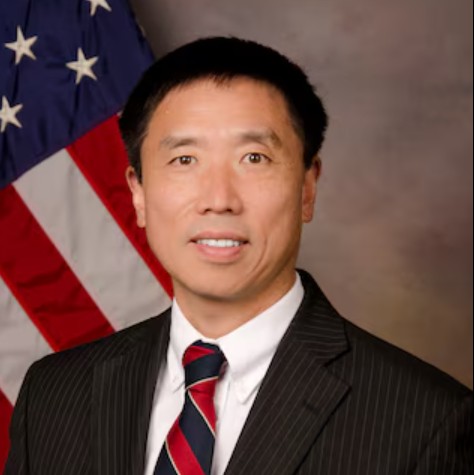
Dr. Jim Chen
Dr. Jim Chen
Professor, Cyber-enabled National Security Strategies, Artificial Intelligence, Cyber Operations,
National Defense University

As federal agencies modernize public sector IT infrastructure, AI is becoming a catalyst for greater efficiency, innovation, and mission delivery, requiring leaders to balance adoption with security, governance, and scalable implementation. Join us to learn more about:

Read More
Matt Passos
Matt Passos
Chief Technology Officer (Acting)
Department of Commerce
Iris Konstant
Iris Konstant
Editor of Branded Content
GovExec
Dr. Jim Chen
Dr. Jim Chen
Professor, Cyber-enabled National Security Strategies, Artificial Intelligence, Cyber Operations,
National Defense University

As federal agencies modernize public sector IT infrastructure, AI is becoming a catalyst for greater efficiency, innovation, and mission delivery, requiring leaders to balance adoption with security, governance, and scalable implementation. Join us to learn more about:

  • Integrating AI into modernization strategies to improve mission outcomes and operational efficiency.
  • Preparing infrastructure, data, and governance frameworks to support AI at scale.
  • Overcoming implementation challenges while ensuring security, trust, and responsible AI adoption.

As federal agencies modernize public sector IT infrastructure, AI is becoming a catalyst for greater efficiency, innovation, and mission delivery, requiring leaders to balance adoption with security, governance, and scalable implementation. Join us to learn more about:

Read More
Matt Passos
Matt Passos
Chief Technology Officer (Acting)
Department of Commerce
Iris Konstant
Iris Konstant
Editor of Branded Content
GovExec
Dr. Jim Chen
Dr. Jim Chen
Professor, Cyber-enabled National Security Strategies, Artificial Intelligence, Cyber Operations,
National Defense University

As federal agencies modernize public sector IT infrastructure, AI is becoming a catalyst for greater efficiency, innovation, and mission delivery, requiring leaders to balance adoption with security, governance, and scalable implementation. Join us to learn more about:

  • Integrating AI into modernization strategies to improve mission outcomes and operational efficiency.
  • Preparing infrastructure, data, and governance frameworks to support AI at scale.
  • Overcoming implementation challenges while ensuring security, trust, and responsible AI adoption.

12:50 PM EDT

5 MINS
12:50 PM EDT 5 MINS

Closing Remarks

12:55 PM EDT

50 MINS
12:55 PM EDT 50 MINS

Networking Lunch